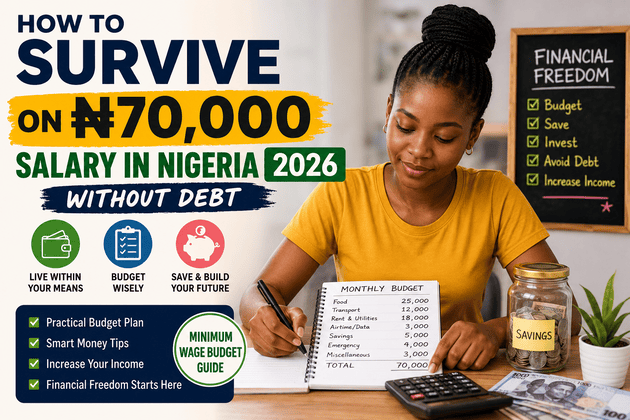
With the rising cost of food, transportation, rent, electricity, and other basic necessities, many Nigerians wonder if it’s even possible to live on a ₦70,000 salary in Nigeria without constantly borrowing money.
The honest answer is this: Yes, but only with strict financial discipline and realistic expectations.
Surviving on ₦70,000 won’t make you wealthy, but it can help you avoid debt, reduce financial stress, and gradually build better money habits. Whether you’re a fresh graduate, an entry-level worker, an apprentice, or someone earning the new minimum wage, this guide will show you practical ways to stretch every naira.
The goal isn’t merely to survive—it’s to stay financially stable while preparing for a better future.
Understand Your Financial Reality
The biggest mistake many salary earners make is spending based on what they wish they earned rather than what they actually earn.
If your monthly income is ₦70,000, then your lifestyle should reflect that reality.
Trying to impress friends, keeping up with social media trends, or living above your means is one of the fastest routes into debt.
Accept your income first. Then build your lifestyle around it.
Create a Simple Monthly Budget
A budget gives every naira an assignment before you spend it.
Here’s an example of a practical minimum wage budget in Nigeria.
| Expense | Suggested Amount |
|---|---|
| Food | ₦25,000 |
| Transportation | ₦12,000 |
| Rent & Utilities | ₦18,000 |
| Airtime/Data | ₦3,000 |
| Savings | ₦5,000 |
| Emergencies | ₦4,000 |
| Miscellaneous | ₦3,000 |
This budget won’t fit everyone.
Someone living in Lagos may spend more on transport, while someone in a smaller town may spend less.
The important thing is ensuring your total expenses never exceed your income.
Never Spend Your Salary Before Receiving It
Many workers already owe money before payday.
Salary advances, online loan apps, and borrowing from friends may solve today’s problem while creating next month’s crisis.
Unless it’s a genuine emergency:
- Avoid salary advances.
- Avoid loan apps.
- Avoid borrowing for wants.
Debt steals tomorrow’s income.
Reduce Food Costs Without Sacrificing Nutrition
Food consumes the largest part of most Nigerian salaries.
Fortunately, there are smart ways to reduce costs.
Buy food in bulk whenever possible.
Cook at home instead of buying food every day.
Reduce soft drinks and snacks.
Choose affordable protein sources like beans, eggs, groundnuts, and fish when meat is expensive.
Plan your weekly meals before shopping.
Food waste is hidden financial waste.
Be Smart About Transportation
Transportation costs continue to rise.
If your office is close enough, consider walking part of the journey.
Use staff buses where available.
Share transport with trusted colleagues.
Combine errands into one trip.
Avoid unnecessary movement.
Saving just ₦500 daily can amount to over ₦10,000 in a month.
Control Your Data and Airtime Spending
Many Nigerians unknowingly spend a large portion of their salary on mobile data.
Use Wi-Fi whenever available.
Download videos instead of streaming repeatedly.
Turn off automatic app updates.
Buy data bundles instead of paying per megabyte.
Track your weekly airtime expenses.
Small digital savings become significant over time.
Rent According to Your Income
Housing should not consume your entire salary.
If your rent is too expensive:
- Consider getting a roommate.
- Move closer to work.
- Relocate to a more affordable neighborhood if practical.
Paying a lower rent can dramatically improve your monthly cash flow.
Build a Small Emergency Fund
Many people borrow money because they have no emergency savings.
Start small.
Even saving ₦5,000 monthly means you’ll have:
- ₦30,000 in six months.
- ₦60,000 in one year.
That money could save you during illness, job loss, or unexpected expenses.
Learn to Say No
One of the biggest financial problems in Nigeria isn’t low income.
It’s social pressure.
People expect you to contribute to every celebration.
Friends invite you out.
Relatives request financial assistance.
You don’t have to say yes to everything.
Protecting your finances isn’t selfish.
It’s responsible.
Increase Your Income
Budgeting alone has limits.
Eventually, you’ll need to earn more.
Fortunately, Nigeria’s digital economy offers many opportunities.
Examples include:
- Freelance writing
- Graphic design
- Online tutoring
- Social media management
- Affiliate marketing
- Blogging
- Selling digital products
- Mini importation
- POS business (where feasible)
Your salary should become your foundation—not your ceiling.
Avoid Lifestyle Inflation
Many people increase spending immediately after getting a salary increase.
Instead:
Increase your savings first.
Increase your investments second.
Increase your lifestyle last.
This habit creates long-term financial security.
Track Every Naira
You can’t control what you don’t measure.
Keep a notebook or use a budgeting app.
Write down every expense.
After one month, you’ll likely discover several unnecessary expenses you never noticed.
Awareness changes spending habits.
Shop Wisely
Compare prices before buying.
Take advantage of market days and discounts.
Buy durable products instead of the cheapest available.
Sometimes buying quality once is cheaper than replacing poor-quality items repeatedly.
Avoid Impulse Buying
Before purchasing anything that’s not essential, ask yourself:
- Do I really need this?
- Can it wait until next month?
- Is there a cheaper alternative?
Waiting 24 hours before making non-essential purchases prevents many regrets.
Develop Multiple Income Streams
Financial stability rarely comes from one income source alone.
Even if your side hustle earns an extra ₦20,000 monthly, your total income rises to ₦90,000.
That additional income could cover transport, savings, or rent.
Never depend entirely on one source of income.
Maintain Good Health
Healthcare is expensive.
Reduce avoidable medical bills by:
- Drinking clean water.
- Sleeping adequately.
- Exercising regularly.
- Eating balanced meals.
- Maintaining good hygiene.
Preventing illness is often cheaper than treating it.
Financial Discipline Beats Financial Size
Many people earning ₦300,000 monthly still struggle because their spending exceeds their income.
Meanwhile, some earning ₦70,000 remain debt-free because they manage money wisely.
Income matters.
But financial discipline matters even more.
Living on a ₦70,000 salary in Nigeria in 2026 is undoubtedly challenging, especially with rising inflation and the increasing cost of living. However, surviving without debt is still possible if you prioritize your needs, follow a realistic budget, avoid unnecessary borrowing, and intentionally build healthier financial habits.
Remember that budgeting is not about denying yourself happiness—it is about making sure today’s spending does not destroy tomorrow’s opportunities. Every naira saved, every unnecessary expense avoided, and every additional source of income you build brings you one step closer to financial stability.
If you currently earn ₦70,000, don’t be discouraged by your present situation. Focus on living within your means while continuously improving your skills, increasing your earning potential, and preparing for greater opportunities ahead.
Financial freedom rarely happens overnight. It is built one wise financial decision at a time.
If you can master money while earning ₦70,000, you’ll be even better prepared to manage larger incomes when they come. You might check out our shop here on this website to order some of our highly educative ebooks on the subject matter. PARTICULARLY the e – course FINANCIAL INTEL COURSE!
You may also want to join our online community at our forum here on this website. It’s FREE to join in.
Yes